
The cabinets changed after templating. Which approval are we asking for?
In this fictional job, a templator uses an LT-2D3D to record the site.
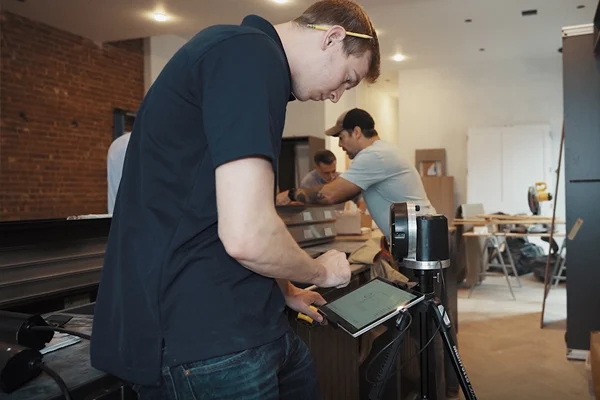
In this fictional job, a templator uses an LT-2D3D to record the site.
In this fictional job, a templator uses an LT-2D3D to record the site. Later, the customer says a cabinet was moved and asks the office to “update the drawing.” The unclear part is whether the team is approving a design preference, confirming a new site condition or both.
Preserve the original observation
Keep the measured record and the date of the visit. Attach the reported change as a separate event, identifying who supplied the information and what they say changed. Do not silently alter the old record so it appears to describe a condition that was never observed.
Ask the responsible technical reviewer what evidence is needed before another production release. This article does not determine whether a return measurement is required; that depends on the actual work and the qualified people responsible for it.
Make the two questions explicit
The first question is factual: what is the current site condition? The second is an authorization question: which resulting design is approved for production? A customer’s approval of a drawing does not, on its own, document how an unobserved dimension was established.
A useful forum question includes the sequence of events, which record is held and which role owns release. It can ask how shops keep a customer change connected to the measurement record without overwriting the visit history.
The goal is a clear decision trail. The next employee should be able to tell what was observed, what was later reported and what information supported the final release.
Further reading
Original editorial analysis and proposed shop exercises based on the linked sources. Illustrative scenarios are not customer testimony or reports of product defects. No firsthand interview, event attendance or hands-on product test is claimed.
Editorial approach & corrections →